
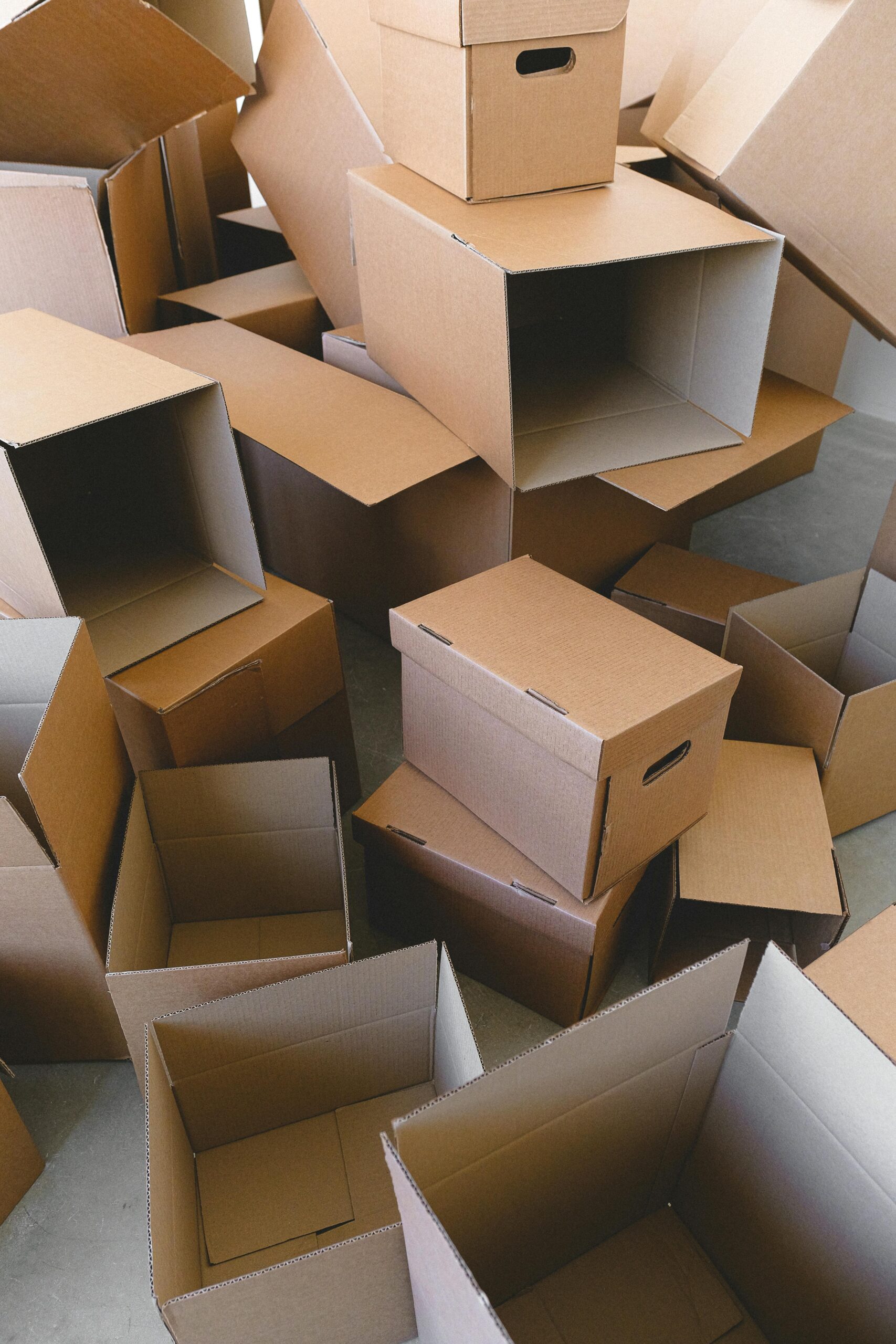
The High Cost of Cardboard: Why Box Sourcing Can Make or Break Your Budget
Most people treat moving boxes as an afterthought, only to be hit with a “cardboard hangover” when they realize they’ve spent $450 at a big-box retailer on paper products they’ll throw away in two weeks. If you are moving a standard 3-bedroom home, you’re looking at needing approximately 70 to 100 boxes. At an average retail price of $2.50 for a medium box and $4.50 for a large one, you’re already $300 deep before you’ve even bought a single roll of tape.
But here is the secret: you should never pay full retail price for every box. By using a “tiered sourcing strategy”—mixing free finds, bulk discounted bundles, and high-quality specialty boxes—you can cut your packing supply costs by 60% or more. This guide breaks down exactly where to go, what to skip, and how to get the best bang for your buck so you can save that money for what really matters: your security deposit or a new sofa.
The “Free Tier”: Scrounging Like a Pro
The cheapest box is a free box. However, the mistake most movers make is grabbing “grocery store” boxes. These are often flimsy, may have held produce (which attracts pests like roaches), or have structural damage from moisture. Instead, target high-quality “clean” cardboard from these specific sources:
- Liquor Stores: These are the gold standard for free boxes. Why? Because they hold heavy glass bottles, making them incredibly sturdy. They also usually come with cell dividers, which are perfect for packing glassware, spices, or perfumes.
- Bookstores: Books are heavy. Consequently, boxes from retailers like Barnes & Noble or independent shops are smaller (easier to carry) and double-walled to prevent “box sag.”
- Facebook Marketplace & Nextdoor: On any given Sunday, there is someone in your neighborhood who just finished unpacking and wants their garage back. Search for “moving boxes” and offer to pick them up within the hour. Most people will give them away for free just to avoid a trip to the recycling center.
- Buy Nothing Groups: These hyper-local communities thrive on gifting. Post a “ISO” (In Search Of) request two weeks before you start packing.
Pro-Tip: If you’re collecting free boxes, stick to a uniform size as much as possible. Mixing 40 different shapes makes loading a moving truck like playing a high-stakes game of Tetris where the pieces can crush each other.
The “Bulk Retail” Tier: Where to Buy When You Can’t Find Free
When the free supply runs dry, or if you want the peace of mind that comes with brand-new, sterile boxes, you need to go where the volume is high and the margins are low. Avoid the “moving kits” sold inside self-storage facilities—these are notoriously marked up by 30-50%.
- Home Depot/Lowe’s:
- Best For: Standard sizes
- Estimated Price (Med Box): $1.50-$2.00
- U-Line:
- Best For: Bulk specialty (100+)
- Estimated Price (Med Box): $1.00-$2.00
- Walmart:
- Best For: Last-minute single boxes
- Estimated Price (Med Box): $2.00-$5.00
- Amazon:
- Best For: Delivery to your door
- Estimated Price (Med Box): $2.00-$5.00 (in bundles)
Note: The prices above are estimates. Always check actual prices with retailers when doing your research and budgeting.
The Home Depot/Lowe’s Advantage: These home improvement giants sell moving boxes as “loss leaders” to get you in the door for higher-margin items like tape and bubble wrap. At under $2.00 for a medium box, they are consistently cheaper than U-Haul or specialized moving companies.
Specialty Boxes: Where You Should Actually Spend Money
While you can scrimp on boxes for your linens and clothes, there are three items you should never put in a budget box: your TV, your dishes, and your hanging clothes.
- TV Boxes ($25 – $60): A 65-inch OLED TV costs $1,500+. Spending $40 on a heavy-duty, foam-padded adjustable TV box is effectively an insurance policy. Standard cardboard will not protect against the torsional force of a moving truck.
- Dish Barrels ($5 – $8): These are double-walled and significantly thicker than standard boxes. When you stack plates vertically (the correct way to pack them), the weight adds up. A standard box will burst at the bottom; a dish barrel won’t.
- Wardrobe Boxes ($12 – $18): These allow you to move clothes directly from the closet to the box on hangers. While expensive, they save you 4–6 hours of folding and unfolding, which is worth the “time cost” for most busy families.
Money-Saving Hack: Use your suitcases for heavy items like books. They have wheels, they’re designed for weight, and you have to move the suitcase anyway – don’t let that space go to waste.
Packing Tape and Cushioning: The Hidden Budget Killers
Tape is where most people lose the “cheap move” game. You’ll see a 6-roll pack of “Moving Tape” for $25 and think it’s a steal. But check the yardage. Many “cheap” rolls only have 25-30 yards, whereas professional rolls have 55-110 yards.
- The Tape Calculation: Plan for 2 rolls of tape for every 15-20 boxes. For a 3-bedroom house, buy a 12-pack of high-quality acrylic tape (at least 2.0 mil thickness). Avoid “Easy Start” or “No Noise” tapes; they often have weaker adhesive that fails in hot moving trucks.
- Ditch the Bubble Wrap: A large roll of bubble wrap can cost $30. Instead, buy a 10lb bundle of “Newsprint” (unprinted packing paper) for about $15. It’s more versatile, recyclable, and takes up less space in the box.
- Use Your Linens: Your towels, blankets, and t-shirts are free padding. Wrap your breakables in your gym shirts and use your bath towels to line the bottom of boxes containing kitchen appliances.
Timing the Market: When to Buy
Believe it or not, moving supplies have a “season.” Demand spikes from May to September (peak moving season). Retailers like Amazon and big-box stores rarely run sales on boxes during this time.
If you are moving in the summer, start scouting Facebook Marketplace and Craigslist in March and April. Families who moved during the spring break “mini-peak” will be looking to offload their supplies. You can often snag $500 worth of specialty boxes and packing paper for $50 or even for free if you’re willing to haul them away immediately.
The “Used” Professional Market
Many professional moving companies end up with “ghost inventory”—boxes that were used once for a white-glove move and then returned to the warehouse. Call local moving companies (not the national franchises, but the “Two Guys and a Van” style local shops) and ask if they have “used boxes for sale.”
They will often sell these for 50 cents on the dollar. Since they are professional grade (usually 200lb burst strength), a “used” pro box is still significantly stronger than a brand-new box from a discount retailer.
Essential Tools Every Mover Needs
Don’t just buy boxes; you need the right tools to handle them. If you are packing more than 20 boxes, do not try to use a handheld tape dispenser without a handle. The repetitive motion will cause wrist strain within the first hour.
The “Must-Have” Kit:
- Tape Gun: A professional-grade 2-inch tape gun ($15-$20).
- Box Cutter: Retractable, with extra blades. Dull blades lead to slips and injuries.
- Heavy-Duty Markers: Chisel-tip permanent markers. Label the TOP and at least TWO SIDES of every box.
- Stretch Wrap: A 1000-foot roll of 5-inch stretch wrap is the “secret weapon.” Use it to keep dresser drawers shut, wrap silverware trays so the forks don’t fly out, and bundle curtain rods together.
Summary Checklist for Saving on Supplies
To ensure you get your moving supplies for the lowest possible price without sacrificing the safety of your belongings, follow this sequence:
- 4 Weeks Out: Post on Crystal/Nextdoor/Facebook asking for free boxes. Tap into your local “Buy Nothing” group.
- 3 Weeks Out: Visit the local liquor store and bookstore for heavy-duty small boxes.
- 2 Weeks Out: Buy your “Specialty Tier” items (TV boxes, Wardrobe boxes) from Home Depot or a bulk online wholesaler.
- 1 Week Out: Purchase your “Bulk Fill” boxes and a 12-pack of professional-grade tape.
- During Packing: Use every towel, sheet, and sweater in your house as padding before reaching for the bubble wrap.
Moving is expensive enough. By being strategic about where you source your cardboard and how you apply your tape, you can easily shave $200-$400 off your total relocation costs. Remember: the goal isn’t just to move your stuff—it’s to move it safely without going broke in the process.
Get more moving tips and tricks here.